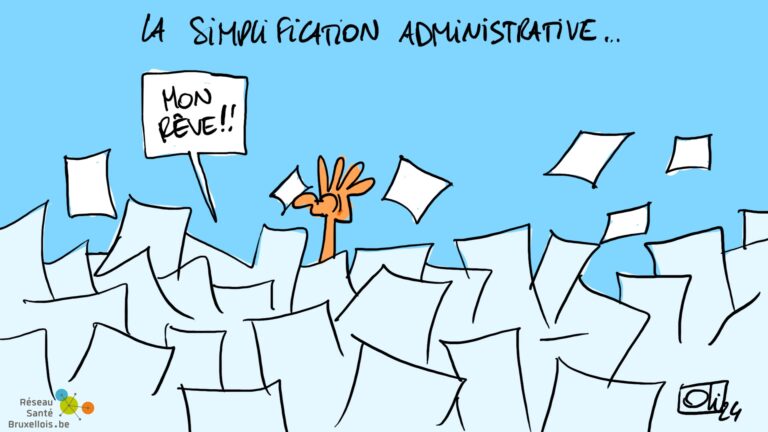
Towards faster publication of discharge letters

Following a project carried out with midwives, Abrumet identified a crucial need: the lack of information when a patient is discharged from the maternity ward significantly complicates follow-up care at home.
Indeed, when a mother returns home, midwives, despite being on the front line of care, have no electronic access to information about their patient’s hospital stay. This has a negative impact on continuity of care.
Our objectives were therefore to:
- Raise awareness of the importance of improving continuity and quality of care as soon as patients return home
- Identify current best practices in hospitals
- Identify technical barriers to the rapid transmission of data
For several years, FAMGB and BHAK have been seeking to improve communication between hospital specialists and GPs. They have proposed a standard discharge letter template containing all the information needed to ensure optimal follow-up of patients after hospitalisation.
For its part, Abrumet conducted a survey a few months ago among Brussels hospitals to better understand how they use discharge letters, the current publication times and the obstacles they encounter.
The results show that the 10 hospitals that responded are largely in favour of publishing discharge letters rapidly. Four hospitals already publish them within 24 hours, and some are working to further improve this publication time.
The main obstacles identified are:
- The need for medical validation by several doctors
- The time required to finalise the document
A technical solution
To address this need, one possible solution could be to generate a hospital discharge summary containing the essential information (diagnoses, prescriptions and issues addressed), without waiting for formal approval of the entire document by a doctor, since the information would already have been recorded in the patient’s medical record during the hospital stay.
This summary, automatically generated from the data entered during the hospital stay, could be transmitted very shortly after discharge, ideally at the same time as the patient leaves the hospital (day 0), thereby facilitating follow-up care by primary care professionals.
Every hospital software system should be able to support this functionality.
This is precisely Abrumet’s role: to coordinate and raise awareness of the need to take action on certain issues, support healthcare providers and contribute to improving existing tools. Our team remains available to all healthcare stakeholders to support this change and help ensure better continuity of care.
Two key points
Difference between a “discharge letter” and a “hospital discharge report”
- The discharge letter is a “provisional” document containing a minimum amount of essential information useful to primary care professionals.
- The hospital discharge report is a comprehensive document containing all relevant information and validated by an authorised doctor. Naturally, publishing this document requires more time.
Obligation to publish the discharge letter within 48 hours under the new hospital standards
- Order of the United Assembly of the Common Community Commission of May 25, 2023
- In force in all Brussels hospitals since September 15, 2024
- Particular attention should be paid to Article 14, 3°
- 3° If the patient has provided the relevant contact details and has given their consent, a copy of the patient’s discharge reports, including the nursing discharge report, must be sent electronically to the patient’s GP or medical centre and/or, where applicable, to the home nurse, no later than 48 hours after discharge. This must be done in accordance with the procedures established by the hospital and the GP network.